I-CADMUS is the practical seafood-integrity framework published by the Seafood Consumer Association. It exists to make the truth in your seafood supply chain visible, classifiable, and actionable.
Seafood is the most fraud-prone food category in the world. One in five products globally doesn't match its label. Frozen prawns can be 40% water by weight. "Fish of the day" hides whatever is cheapest in the back of the freezer. And HACCP — the food safety standard the industry leans on — answers a question I-CADMUS asks first: is the product even what it claims to be?
The Seafood Consumer Association created I-CADMUS to give the industry, regulators, and the consumer a single shared language for seafood fraud. Seven categories. One taxonomy. Built from real supply-chain experience, not theoretical risk modelling.
Food safety has to start with truth in labelling. You can't make safe what you can't even identify.
The framework is paired with the forthcoming book Sea of Deception, an online certification programme, an open-data publications register, and a growing network of academic and industry partners — beginning with Bond University and expanding to one institutional partner per country.
Three forces are converging: DNA verification has become affordable enough for routine use, traceability technology has matured, and consumer trust in food labelling has reached a generational low. The next decade will be shaped by who provides the framework — and the language — to act. I-CADMUS is that framework.
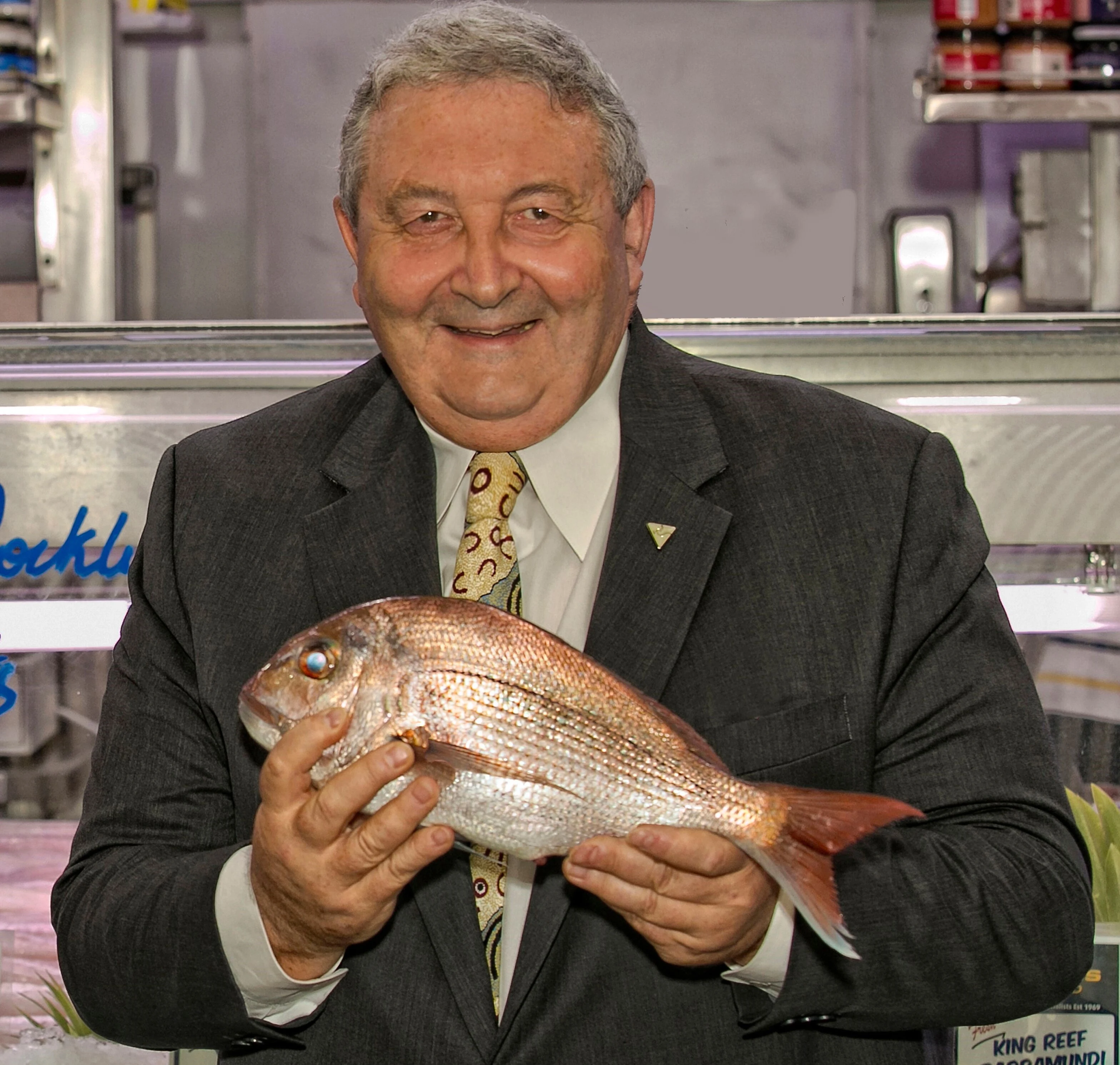
Roy Palmer's career spans more than five decades across the global seafood supply chain — from working boats and processing floors to international standards bodies and academic appointments. He has served as Chief Executive of multiple industry-peak organisations, advised national regulators across three continents, and held honorary professorships at universities working on aquaculture sustainability.
I-CADMUS is the distillation of that work. After watching the same seven categories of fraud appear repeatedly across markets, supply chains, and decades — under different names, with different cover stories — Palmer set out to give the industry a single classifier. The framework you see published here is the result.
Each fraud category in the I-CADMUS taxonomy is countered by a corresponding policy lever. The five pillars below form the playbook every regulator working on seafood integrity should consider.
End "fish of the day," generic species names, and ambiguous trade names. Adopt AS 5300 or equivalent at every point of sale, from menu to label.
Routine, affordable species verification at customs, processing, and retail. The technology exists. The political will is the gap.
Fines that exceed the margin gained by fraud. Repeat offences trigger trading suspensions. Without consequence, classification is theatre.
End-to-end traceability from vessel to plate. QR-linked records that cannot be retroactively edited. Open auditability.
The right to know what species you're buying, where it came from, and how it was harvested — protected in law, not by aspiration.
All five pillars are detailed in Sea of Deception, with implementation case studies and recommended legislative language.
Beginning a career across boats, processing, retail, peak industry bodies, and international standards work — building the lived experience the framework would later be drawn from.
A multi-year campaign to introduce mandatory species naming standards across Australian seafood retail. The work surfaces the gaps that I-CADMUS would later fill.
An independent body to advocate for transparency, accuracy, and integrity in seafood labelling — answerable to consumers, not to industry incumbents.
The seven-category taxonomy is formalised after years of pattern-matching across investigations, supply-chain audits, and case-study work.
Bond becomes the first academic partner, leading research and certification delivery. The "one institutional partner per country" expansion model is set.
The framework, the book, the certification, and the open-data publications register all go live together — the public release of a decade of work.
A team drawn from industry, academia, regulation, and consumer advocacy.
Author of Sea of Deception. Five decades in the global seafood industry.
Leads the I-CADMUS certification programme and university partnership delivery.
Coordinates AS 5300, FRDC, and Codex alignment across the framework.
Works with retail, foodservice, and processor partners on audit deployment.
Leads case-study verification and DNA-testing research with academic partners.
Heads the consumer-facing tools: scorecard, quiz, and the public reporting channel.
If you're a university, retailer, regulator, or processor interested in adopting I-CADMUS or joining the partner network — we'd like to hear from you.